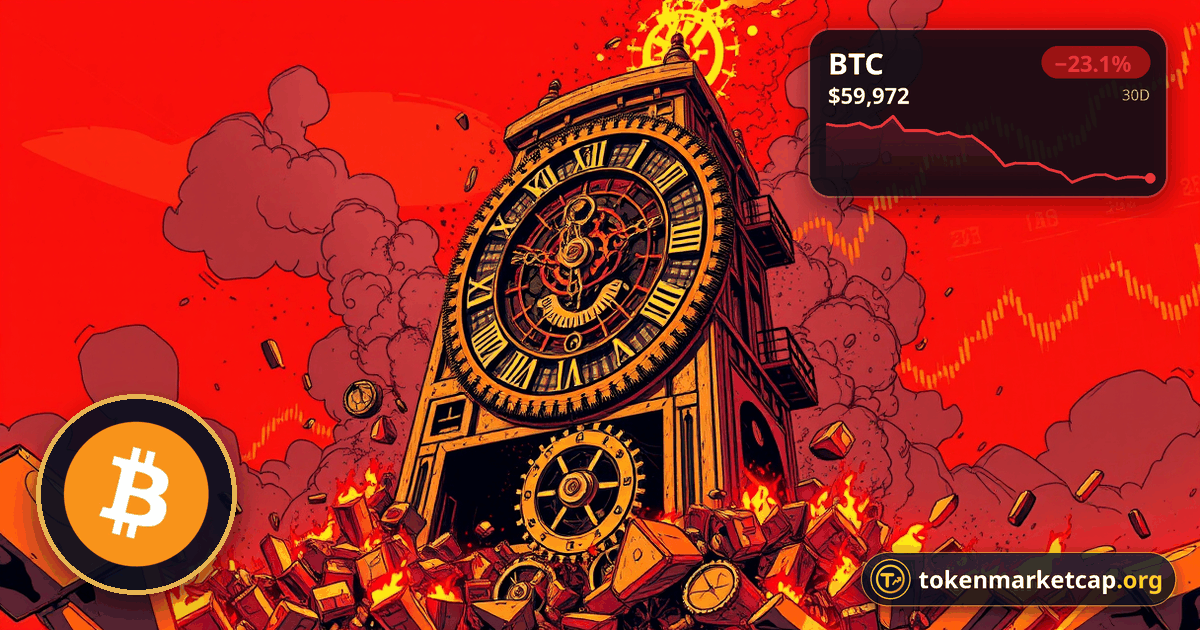
Bitcoin Faces Japan Inflation Test While US ETFs Are Closed
Tokyo inflation data lands while US spot Bitcoin ETFs are shut, testing BTC's rebound above $60,000 as a BOJ official flags possible faster hikes.
核心要点
- Bitcoin traded near $60,538 at 10:40 UTC on Thursday, after dropping to $57,210 and then closing at $60,368 on Wednesday.
- BOJ board member Naoki Tamura said rate increases could speed up if underlying inflation shows signs of overshooting the 2% target.
- Tokyo's early November inflation data is due about 15 hours before US spot Bitcoin ETFs reopen at 9:30 a.m. ET Friday.
- A rising two-year Japanese government bond yield alongside a stronger yen would indicate mounting pressure on yen-funded positions.
Bitcoin BTC is back above $60,000, but the rebound has an early checkpoint in Japan. Tokyo releases early November inflation numbers on Friday morning local time, which is Thursday evening in New York. US spot Bitcoin ETFs will be shut when the data arrives, so the first response will play out in crypto markets that trade around the clock.
Where the Bitcoin rebound stands
CryptoSlate data shows BTC sliding as low as $57,210 on Wednesday before ending that day at $60,368. By 10:40 UTC on Thursday it had edged up to roughly $60,538.
- BTC low, Wednesday$57,210
- BTC close, Wednesday$60,368
- BTC, Thursday 10:40 UTCAbout $60,538
That leaves the price only modestly above the round-number mark, with a macro release due during the Thanksgiving break.
| Indicator | Level |
|---|---|
| BTC low, Wednesday | $57,210 |
| BTC close, Wednesday | $60,368 |
| BTC, Thursday 10:40 UTC | About $60,538 |
| BOJ overnight policy rate | 1.25% |
| Tamura's neutral rate estimate | Around 2% |
| Yen per dollar, 5 p.m. Tokyo Thursday | About 159.17 |
What the Bank of Japan is signalling
Naoki Tamura, who sits on the Bank of Japan's policy board, used a Thursday speech in Yamanashi to argue that rate hikes could come faster. His condition: signs that underlying price growth is running past the central bank's 2% goal.
He also repeated his view that a rate of about 2% would neither spur nor slow the economy. The current policy rate sits 75 basis points below that level, after officials left it unchanged in October. These are one board member's remarks and do not amount to a decision by the bank.
Currency markets reacted only mildly. Central bank figures put the dollar near 159.17 yen late in the Tokyo day, against 159.21 earlier, a slight gain for the Japanese currency.
Background: why Japan matters to crypto
In general, Japan's comparatively cheap borrowing costs have made the yen a popular funding currency. In what is known as the carry trade, investors take loans in yen and put the money into higher-returning assets abroad, which can include Bitcoin and other dollar-priced holdings.
Tighter policy can squeeze that strategy through two channels, which may hit separately or at once:
- Exchange rate: if the yen rises, borrowers without a currency hedge need more dollars to pay back the same debt, even with Bitcoin's price flat.
- Interest cost: higher Japanese rates can make it more expensive to roll an existing loan into a new one.
When returns shrink this way, leveraged traders may cut risk positions to settle what they owe in yen. The source material does not say how much Bitcoin exposure is currently financed like this.
The Thanksgiving timing gap
The Tokyo price report is scheduled for 8:30 a.m. Friday local time, or 6:30 p.m. ET on Thursday. US spot ETFs do not resume trading until 9:30 a.m. ET Friday, in a shortened NYSE Arca session.
That is a gap of about 15 hours. ETF investors cannot act through those funds in the meantime, while Bitcoin itself keeps changing hands worldwide.
The Tokyo figures also offer an advance clue ahead of Japan's countrywide inflation report on Dec. 18. Traders can therefore start revising their expectations for central bank policy several weeks before that broader reading.
What to watch next
The signal to follow is the combination of Japan's two-year government bond yield and the yen. If both climb after the release, it would point to growing strain on yen-funded trades. A cooler inflation print could instead dial back bets on faster tightening and remove one possible source of selling.
Our assessment: this is a conditional risk, and neither a hot number nor a Bitcoin sell-off is a given. The open question is how sensitive the market still is to yen funding costs. Friday's overnight price action, followed by the ETF reopening, should show whether any initial move holds once US fund investors return.
你怎么看?
来源
关于本文
由 TokenMarketCap 新闻团队撰写。我们阅读多份关于同一事件的独立报告并独立成文,绝不转载或翻译他人的文章。所有数据在发布前均经过信源核对。
本文仅供参考,不构成投资建议。做出任何决定前请自行研究。