Liquid Network Restores Full Bitcoin Reserves After Hack
Liquid Network restores full 1:1 Bitcoin backing for LBTC following a $320 million September exploit, with enhanced security measures now in place.
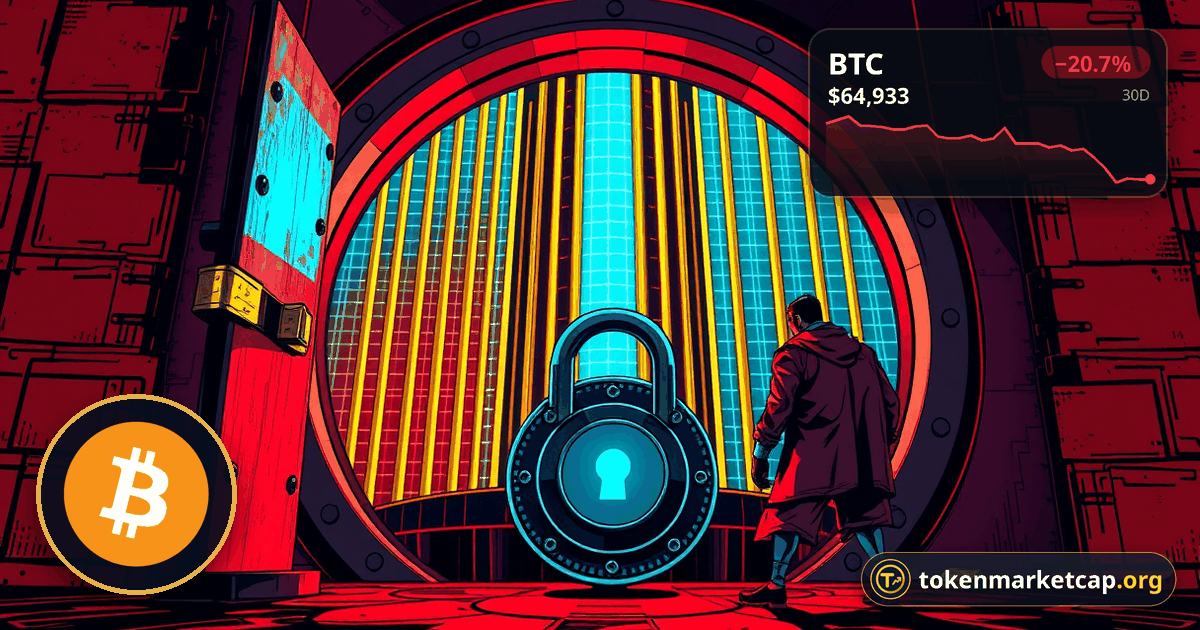
The Liquid Network has successfully recovered its full asset backing following a major security breach that occurred in September. According to an announcement from the Liquid Federation, every single unit of LBTC, the asset representing Bitcoin on the platform, is once again fully supported by actual Bitcoin at a one-to-one ratio. This milestone follows the earlier reactivation of direct swaps between Bitcoin and Liquid Bitcoin through participating service providers. While the network dashboard now confirms a zero-balance reserve deficit, questions remain regarding the exact financial mechanisms used to cover the missing shortfall.
Understanding the Liquid Network Sidechain
Established initially by Blockstream in 2018, Liquid functions as a secondary blockchain operating alongside the primary Bitcoin network. This architecture aims to facilitate rapid transactions and confidential settlements for institutional traders and participating cryptocurrency platforms. To utilize the system, participants deposit their primary cryptocurrency into a central wallet managed by a collective known as the Liquid Federation, which comprises various exchanges and digital asset enterprises. In exchange for the locked assets, participants receive an equivalent amount of network tokens. Historically, such sidechains provide alternative execution environments while relying on distinct validation models separate from the main network consensus.
The September Security Breach and Partial Return
The network suffered a significant exploit on September 6, when individuals identifying as white-hat hackers drained approximately 4,000 BTC from the central federation wallet. At the time of the incident, the stolen assets carried an estimated valuation of $320 million. Communication with the operators took place through encrypted messages embedded directly within primary chain transactions. By the following day, the entities responsible returned roughly 3,400 BTC, valued at approximately $269 million, after developers deployed software patches to the bridge nodes. However, the unauthorized actors retained nearly 598 BTC, prompting public debate across the industry regarding whether the retained funds constituted a bounty or a form of extortion.
Technical Fixes and Hardened Defenses
Following the incident, Blockstream Chief Executive Officer Adam Back outlined several newly implemented security measures designed to prevent similar breaches. These upgrades include updating peg-out authorization keys to cold storage hardware solutions, disabling proof validation caches alongside specific node patches, and tightening consensus parameters to ensure the network fails closed during anomalies. Furthermore, executive statements highlighted the rising influence of artificial intelligence in code evaluation, with Back advising caution regarding automated security suggestions. The federation also indicated plans to restructure its internal governance framework, promising enhanced operational oversight and additional technical safeguards in upcoming announcements.
Market Outlook and Future Monitoring
The complete restoration of asset backing removes a major dark cloud that has hung over the sidechain for months. Observers will be closely watching the upcoming governance reforms promised by the federation to see how oversight evolves. At the same time, the broader crypto community continues to debate the implications of AI-assisted development tools in safeguarding complex financial infrastructure. Unanswered questions persist regarding how the remaining financial gap was closed, leaving market participants waiting for transparency on the final accounting.
Что думаете об этой новости?
Источники
Об этой статье
Материал редакции TokenMarketCap. Мы анализируем несколько независимых источников и пишем материал самостоятельно, никогда не перепечатывая чужие тексты. Все данные проверяются перед публикацией.
Обновлено 3 ноября 2026 г.
Материал носит информационный характер и не является инвестиционной рекомендацией. Проводите собственное исследование перед решением.