Solana Ends 'Mainnet Beta' Era With Protocol Version 1.0
The Solana Foundation has removed the 'mainnet beta' label after more than six years and adopted Solana 1.0 as a shared protocol version.
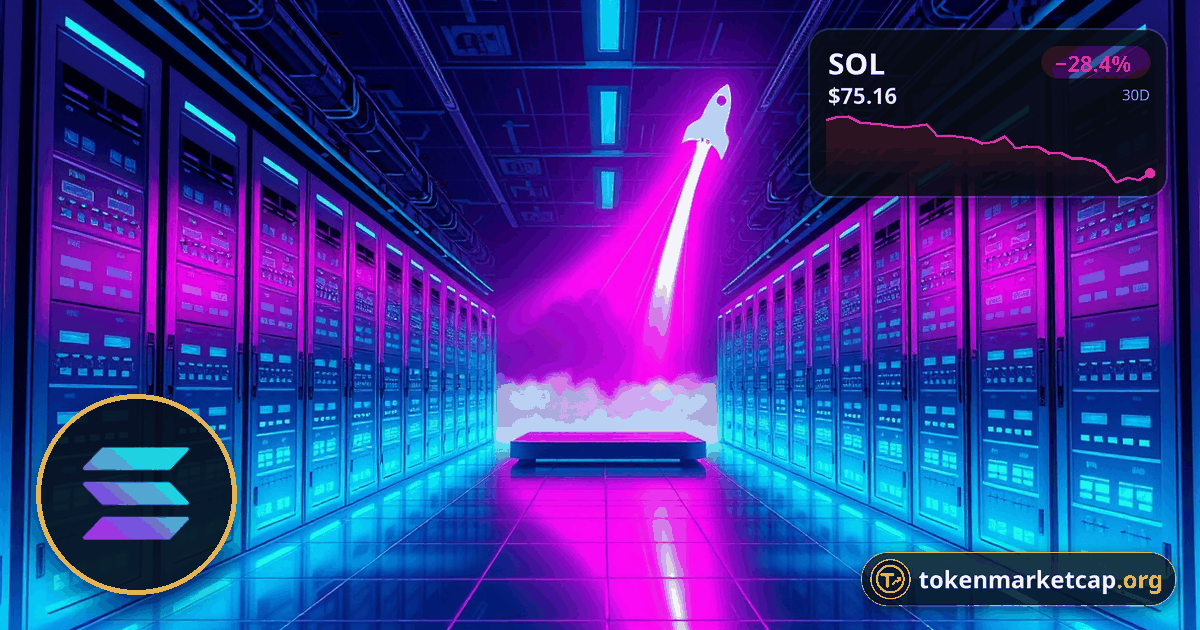
Solana has stopped calling its main network a beta. After running under that label for more than six years, the network now uses Solana 1.0, a protocol version that the Solana Foundation is presenting as a common reference point for the whole ecosystem. The change does not alter how SOL is held or transferred. It is a change in how the project describes its own maturity, and it sets a baseline for how future versions of the network are labelled.
What Changed and Who Made the Call
The Solana Foundation, the non-profit that supports the network's development and ecosystem, made the announcement. It covers two things:
- The “mainnet beta” label is gone. The production network that holders, applications and validators have used for years no longer carries the beta tag.
- Solana 1.0 is now the protocol version. The Foundation describes it as a shared version number, meaning one agreed label for the rules of the network rather than a version tied to a single piece of software.
The sources do not report any accompanying hard fork, token change or new feature activation. Read that way, this is a naming and versioning milestone, not a technical upgrade that users have to act on.
Background: Why Solana Kept the Beta Tag So Long
Many blockchain projects launch their main networks with a beta label, which tells users that the system is live and handling real value but is still being hardened. Solana kept that wording for an unusually long time. Over those six-plus years it became one of the most heavily used smart contract platforms, with a large base of decentralised exchanges, NFT marketplaces, payment apps and memecoin trading.
Historically, the beta label has also reflected real growing pains. In its early years Solana suffered several high-profile network halts and periods of heavy congestion, and validators sometimes had to coordinate restarts. Critics often pointed to these incidents when arguing that the chain prioritised speed over resilience. Keeping the beta tag was, in effect, an open admission that the network's reliability was still a work in progress.
More broadly, the Solana ecosystem has spent recent years working towards several independent validator client implementations, built by different teams, instead of relying on one codebase. When more than one client runs the same network, a version number tied to the protocol itself, rather than to any one client's release, becomes useful for keeping everyone aligned. A shared “1.0” label fits that direction, although the sources do not spell out the Foundation's full reasoning.
Why the Label Matters to SOL Holders and Builders
For someone holding or watching SOL, nothing changes overnight. Balances, wallets and staking work exactly as before. Still, labels carry weight in a few areas:
- Perception and trust. Institutions, custodians and enterprise partners often judge infrastructure by whether its own operators still call it experimental. Dropping the beta tag removes a point that sceptics could easily cite.
- Coordination. One protocol version number gives developers, validators, exchanges and tooling providers a single reference for compatibility, which matters more as the client landscape diversifies.
- Accountability. Calling the network 1.0 implicitly raises expectations. Any future outage will be judged against a “production-ready” claim rather than excused as part of a beta phase.
Assessment: A Symbolic Step With Open Questions
This milestone is largely symbolic, but symbolism has value in a sector where reliability claims are scrutinised closely. Removing the beta label signals that the Solana Foundation is confident enough in the network's stability to stop hedging in its own naming. Whether the market treats it as meaningful will likely depend less on the announcement and more on the network's uptime record from here.
Several questions remain unanswered in the available reporting. It is not yet clear how the Foundation will number future protocol changes after 1.0, whether major upgrades will move the version to 1.x or 2.0, or how client teams will signal that they support a given protocol version. Readers should also watch whether exchanges, custodians and infrastructure providers update their own documentation and risk descriptions to match the new label. Those follow-up details will show whether Solana 1.0 is mainly a rebrand or the start of a more formal versioning process for the network.
O que você achou desta matéria?
Fontes
Sobre este artigo
Escrito pela equipe de notícias do TokenMarketCap. Lemos vários relatórios independentes sobre o mesmo fato e redigimos a matéria por conta própria; nunca republicamos ou traduzimos textos de terceiros. Os dados são verificados com as fontes antes da publicação.
Atualizado em 16 de novembro de 2026
Este artigo é apenas informativo e não é recomendação de investimento. Pesquise por conta própria antes de qualquer decisão.