Solana Venture in Japan Brings Together SBI and SMFG
SBI, SMFG and the Solana Foundation form SBI Solana Global to pursue stablecoin payments, tokenized assets and onchain finance in Asia.
Points clés
- SBI, SMFG and the Solana Foundation said on Wednesday they had finalized agreements for a joint venture named SBI Solana Global.
- The company grows out of SBI R3 Japan and plans to work on stablecoin payments, asset tokenization and onchain asset management.
- Its roadmap includes domestic and international remittance systems and an exploration of micropayments made by AI agents.
- SBI's earlier stablecoin moves include USDC trading from March 2025 and the June 2026 launch of yen-backed JPYSC with Startale.
Two heavyweights of Japanese finance, SBI and Sumitomo Mitsui Financial Group (SMFG), are teaming up with the Solana Foundation on a new company called SBI Solana Global. The three said on Wednesday that their agreements are complete. The venture's job is to move payments, assets and investment management onto blockchain rails, with Asia as its target region.
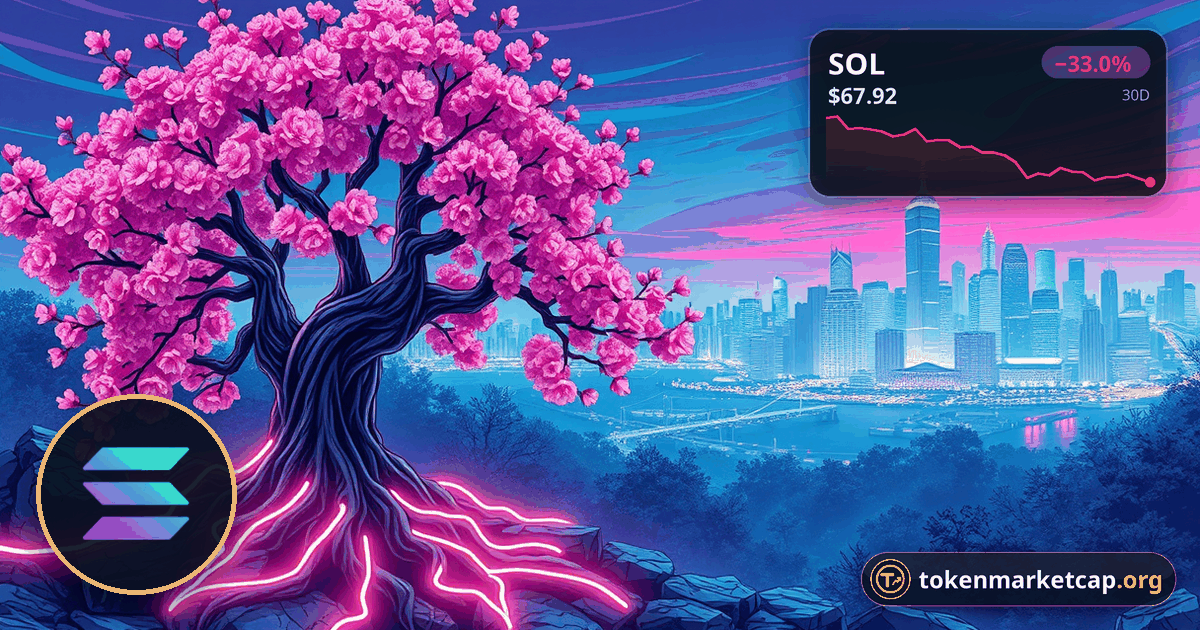
For anyone following SOL, the notable part is that established financial institutions are tying a dedicated business to the Solana SOL ecosystem. The announcement sets out ambitions, though, and should not be read as a list of products already running.
What the New Company Plans to Build
SBI Solana Global is not starting from a blank page. It takes over from SBI R3 Japan, an existing entity that is being reshaped into a joint venture and is now set to operate at full scale.
Its agenda covers several connected areas:
- Payments: infrastructure that uses stablecoins, including rails for sending money both inside Japan and across borders.
- Tokenization: turning financial instruments and other real-world assets into blockchain-based tokens.
- Capital markets products: helping issue and distribute digital versions of bonds, fund products and claims on loans.
- Asset management: investment services run directly on a blockchain.
- Machine payments: a look into whether AI agents could settle very small transactions on their own.
Firm plans versus experiments
These items are not all at the same level of maturity. The AI agent idea is described as something to be explored, so it is best treated as an early line of inquiry. Remittance systems and support for tokenized securities appear among the company's development plans, but the source material gives no delivery dates for them.
Background: How SBI Got Here
SBI Holdings is a Japanese financial group with a crypto arm, SBI VC Trade. SMFG is another major name in the country's financial sector. The Solana Foundation is the organization that supports the Solana network, whose native token is SOL.
As general context, stablecoins are tokens designed to track the value of a conventional currency. Tokenization means recording ownership of an asset, such as a bond or a fund share, as a token that can be transferred on a blockchain. Historically, the R3 name has been associated with enterprise ledger technology aimed at financial institutions, which makes the shift toward a Solana-branded company worth noticing.
The groundwork was visible before this week. In July, SBI Holdings and the foundation unveiled a strategic partnership that already flagged a new name for SBI R3 Japan and a push to build systems that help institutions adopt blockchain.
SBI had also been assembling a stablecoin position covering both the US dollar and the yen:
| Timing | Step |
|---|---|
| March 2025 | SBI VC Trade starts offering trading in USDC USDC |
| June 2026 | SBI group and Startale launch JPYSC, a yen-backed stablecoin |
| July | SBI Holdings and Solana Foundation announce a strategic partnership |
| Wednesday | Final agreements for SBI Solana Global are announced |
Why It Matters and What to Watch
Our reading is that the venture links pieces that are often pursued separately. A payment token is more useful when there are assets to buy with it, and tokenized assets benefit from a way to settle in digital money. Housing both efforts in one company could shorten the distance between them, provided the products actually reach users.
The involvement of SMFG adds institutional weight beyond SBI's own crypto activity. Still, a corporate structure says little about demand. It also does not tell SOL holders how much transaction volume, if any, will end up on the public network.
Several questions remain open in the material we reviewed:
- How ownership and funding are divided among the three parties.
- When the first service will go live.
- Which stablecoins the payment systems will rely on, and whether JPYSC or USDC will play a role.
- Which institutions or customers will be first to use the tokenized products.
The signals worth tracking next are concrete ones: a named pilot, a first tokenized issuance, or a remittance route that handles real transfers. Until then, this is a significant statement of intent whose market effect has yet to be measured.
Questions fréquentes
What is SBI Solana Global?⌄
It is a joint venture involving SBI Holdings, SMFG and the Solana Foundation, created by restructuring SBI R3 Japan. It focuses on tokenization, stablecoin payments and managing assets onchain, with an eye on expanding such services across Asia.
What will the Japanese Solana venture tokenize?⌄
The company plans to work with financial and real-world assets. It also intends to support the issuance and distribution of bonds, investment funds and loan receivables in tokenized form.
Which stablecoins has SBI been involved with?⌄
SBI VC Trade, the group's crypto subsidiary, began offering USDC trading in March 2025. In June 2026, the group and Startale launched JPYSC, which is backed by the yen.
Qu'avez-vous pensé de cet article ?
Sources
À propos de cet article
Rédigé par la rédaction de TokenMarketCap. Nous analysons plusieurs rapports indépendants sur un même événement pour rédiger notre propre article, sans jamais republier ni traduire le texte d'autrui. Les chiffres sont vérifiés auprès des sources avant publication.
Mis à jour le 25 novembre 2026
Cet article est fourni à titre informatif et ne constitue pas un conseil en investissement. Faites vos propres recherches avant toute décision.