How to Buy Bitcoin in 2026: A Step-by-Step Guide
Learn how to buy bitcoin in 2026: choose a regulated exchange, verify your account, place a market or limit order and move BTC to a secure wallet.
Key takeaways
- To buy bitcoin, open an account with a regulated exchange, verify your identity, deposit funds and place a market or limit order.
- Compare exchanges on licensing, total fees, security features and whether they let you withdraw BTC to your own wallet.
- Moving bitcoin to a self-custody wallet and keeping your recovery phrase offline lowers the risk of losing coins if a platform fails.
- Bitcoin is highly volatile and transactions cannot be reversed, so only invest what you can afford to see fall sharply in value.
To buy bitcoin, open an account with a regulated cryptocurrency exchange or broker, verify your identity, deposit money in your local currency, and place a buy order for BTC BTC. Once the purchase settles, you can leave it on the platform or withdraw it to a wallet you control yourself, which most security experts prefer for larger amounts.
The process is similar whether you are in the US, the UK, India, Canada or Australia. What changes from country to country is which platforms are licensed locally, which payment methods you can use, and how gains are taxed. This guide covers each step, explains the choices that matter, and points out the mistakes beginners make most often.
- $61,852.50
- Price
- $1,242.69 billion
- Market cap
- $41.84 billion
- 24h volume
- 20,114,434 BTC
- Circulating supply
- 24 hours-3.41%
- Seven days-10.87%
- 30 days-25.88%
Bitcoin at a Glance Before You Buy
Bitcoin (BTC) is the largest cryptocurrency by market capitalisation, holding the number 1 rank. As of 20 November 2026, one bitcoin trades at about $61,852.50, the total market capitalisation is $1,242.69 billion, and 24-hour trading volume is $41.84 billion.
The supply is fixed by the protocol. 20,114,434 BTC are currently in circulation, and the maximum supply is capped at 21,000,000. That cap is part of why some people treat bitcoin as a long-term store of value, but it does not protect the price from steep swings.
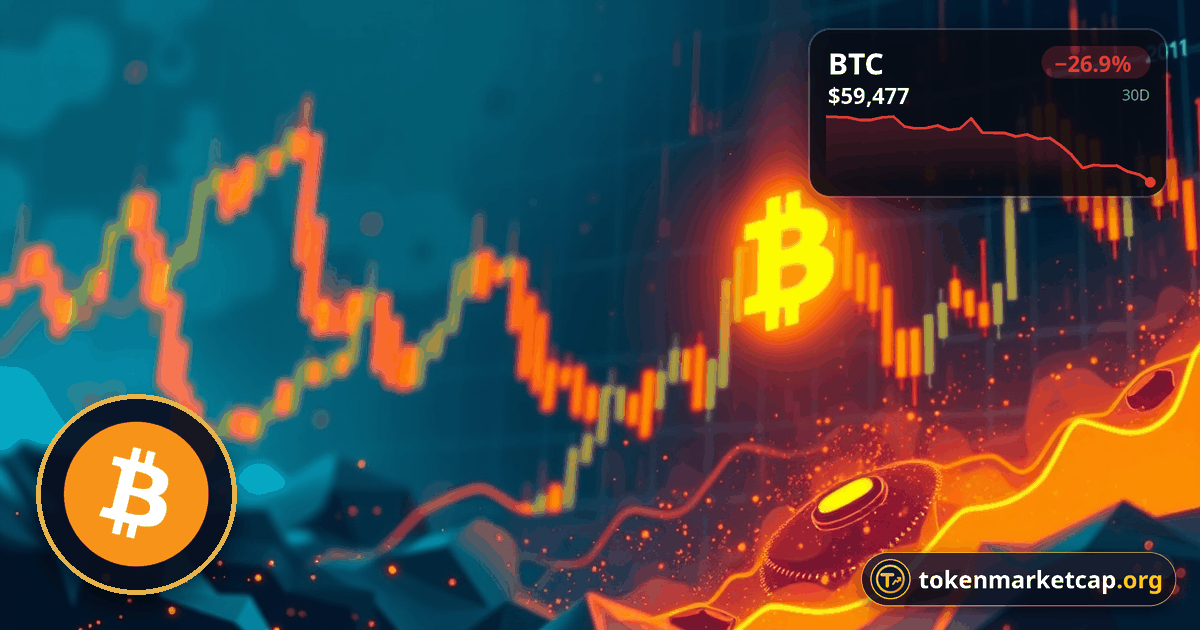
Recent moves show how volatile it is. Over the same period, BTC changed -3.41% in 24 hours, -10.87% over seven days and -25.88% over 30 days. Before you buy, check the live price, chart and trading markets on TokenMarketCap so you know the current figure rather than one from a stale screenshot.
You do not need to buy a whole bitcoin. BTC can be divided into very small fractions, so you can buy exactly the amount in your local currency that you are comfortable with, even if that is a small fraction of one coin.
Step-by-Step: How to Buy Bitcoin
- Check the live price and markets. Look up BTC on TokenMarketCap to see the current price, recent performance and where it trades, so you can tell whether a platform's quote is reasonable.
- Choose a regulated exchange or broker. Pick a platform that is licensed or registered where you live, using the criteria in the next section.
- Create and verify your account. Sign up with your email, set a strong unique password, turn on two-factor authentication and complete identity verification (KYC).
- Deposit funds. Add money by bank transfer, debit card or another supported method. Compare the fees for each method before you choose one.
- Place your order. Use a market order to buy straight away at the current price, or a limit order to set the price you are willing to pay.
- Move your BTC to a self-custody wallet. If you plan to hold for a while, withdraw to a wallet where only you hold the private keys.
- Secure your backup and keep records. Store your recovery phrase offline and save transaction records for tax purposes.
How to Choose a Regulated Exchange
The platform you choose affects your costs, your safety and how easily you can get your money back out. Rather than relying on rankings or advertising, judge each option on criteria you can check yourself.
What to evaluate
- Regulation and licensing: Confirm the platform is registered with your local financial regulator or financial intelligence unit. Most regulators publish a searchable register.
- Total fees: Look at trading fees, the spread (the gap between the buy and sell price), deposit fees, and withdrawal fees for both cash and BTC.
- Security record: Look for two-factor authentication, withdrawal address allowlists, cold storage of customer funds and published proof-of-reserves reports.
- Supported networks: Check that BTC withdrawals to your own wallet are allowed and which networks are supported. Some apps only let you buy, not withdraw.
- Payment methods and local currency: Being able to deposit in your own currency avoids conversion costs.
- Customer support and track record: Read about how the platform handled past outages, account freezes and complaints.
Exchanges vs payment apps vs brokers
Dedicated crypto exchanges usually have the lowest fees and let you place limit orders. Payment and fintech apps are convenient, but their spreads are often wider and some restrict withdrawals to outside wallets. Brokers selling bitcoin funds give you price exposure without you owning the coins directly.
Placing Your Order: Market vs Limit
Once your deposit has cleared, go to the BTC trading page. You will normally pair it with your local currency or a stablecoin.
A market order fills immediately at the best price available. It is simple, but in fast-moving markets the final price can differ a little from the quote you saw.
A limit order lets you name the price you are willing to pay. It only fills if the market reaches that level, so you get price control at the cost of not knowing when, or whether, the order will fill. Many exchanges also charge lower fees on limit orders.
Some buyers spread their purchases over time with small recurring buys instead of one lump sum. This approach, often called dollar-cost averaging, reduces the risk of putting everything in at a single bad moment. It does not guarantee a better result.
Moving Bitcoin to a Self-Custody Wallet
If you leave bitcoin on an exchange, the exchange holds the keys. If it gets hacked, goes bankrupt or freezes withdrawals, you could lose access. Self-custody means you hold the private keys, and therefore the coins, yourself.
Hot wallets and hardware wallets
Hot wallets are apps on your phone or computer. They are free and convenient for smaller amounts. Hardware wallets are physical devices that keep your keys offline and are generally the more secure option for larger amounts held long term.
How to withdraw safely
Copy your wallet's receiving address, paste it into the exchange withdrawal form and check the first and last characters carefully. Clipboard malware can swap addresses. For a first transfer, many people send a small test amount, confirm it has arrived, and then send the rest.
Security Checklist
- Use a unique password and app-based two-factor authentication, not SMS where you can avoid it.
- Write your recovery phrase on paper or metal and store it offline. Never photograph it, type it into a website or share it.
- Turn on withdrawal address allowlists if your exchange offers them.
- Ignore unsolicited messages offering help, giveaways or "guaranteed" returns. These are almost always scams.
- Buy hardware wallets only from the manufacturer or an authorised seller, never second-hand.
- Keep records of every purchase, sale and transfer for tax reporting.
Buying Bitcoin in Your Country
The steps are the same everywhere, but local rules decide which platforms you can use.
- United States: Choose platforms registered with federal and state regulators. Some payment apps let you buy BTC, but check whether you can withdraw to your own wallet.
- United Kingdom: Crypto firms serving UK customers must be registered with the Financial Conduct Authority. Check the FCA register before you sign up.
- India: Use exchanges registered with the Financial Intelligence Unit (FIU-IND), and be aware of the specific taxes on crypto income and transactions.
- Canada: Look for platforms registered with provincial securities regulators and with FINTRAC as a money services business.
- Australia: Digital currency exchanges must be registered with AUSTRAC.
Risks and Things to Know
Bitcoin is volatile. The -25.88% move over 30 days shown above is a reminder that large drops can happen quickly. Only invest money you could afford to see fall sharply in value.
Bitcoin transactions cannot be reversed. If you send BTC to the wrong address or to a scammer, there is usually no way to get it back. Platform risk is also real: exchanges have failed before, and crypto balances are generally not protected by the deposit insurance that covers bank accounts.
Finally, taxes apply in most countries. Selling, swapping or spending bitcoin can be a taxable event, so keep accurate records and check your local rules or speak to a qualified tax professional.
Bitcoin (BTC) key data
Data from TokenMarketCap as of 20 November 2026; it changes in real time.
| Price | $61,852.50 |
|---|---|
| Market cap | $1,242.69 billion |
| Market cap rank | #1 |
| 24h volume | $41.84 billion |
| 7-day change | -10.87% |
| 30-day change | -25.88% |
| Circulating supply | 20,114,434 |
| Max supply | 21,000,000 |
Track it on TokenMarketCap
- Live Bitcoin price, chart and market data
- Where BTC trades: exchanges and pairs
- Crypto converter
- Token security scanner
This guide is for information only and is not financial advice. Cryptoassets are volatile; do your own research and never invest more than you can afford to lose.
Frequently asked questions
How do I buy bitcoin online for the first time?⌄
Sign up with a regulated exchange, complete identity verification, deposit money and place a buy order for BTC. Then think about withdrawing it to a wallet you control.
Can I buy bitcoin with a payment app?⌄
Some payment and fintech apps let you buy BTC directly, which is convenient for small amounts. Check their spreads and fees, and whether they let you withdraw bitcoin to an outside wallet.
How do I buy bitcoin in the UK?⌄
Use a crypto platform registered with the Financial Conduct Authority, deposit pounds by bank transfer or card, and buy BTC. You can check a firm's status on the FCA register.
How do I buy bitcoin in India, Canada or Australia?⌄
Choose an exchange registered with the local authority: FIU-IND in India, FINTRAC in Canada or AUSTRAC in Australia. Then deposit local currency and place your order. Local tax rules apply to crypto gains.
Do I have to buy a whole bitcoin?⌄
No. Bitcoin can be divided into tiny fractions, so you can buy any amount the platform allows, even though one BTC trades at about $61,852.50 as of 20 November 2026.
What did you think of this story?
Sources
About this article
Written by the TokenMarketCap news desk. We read several independent reports of the same development and write the story ourselves; we never republish or translate someone else's text. Figures are checked against the sources before publication.
This article is for information only and is not investment advice. Do your own research before making any decision.